ut.code(); (Eng.)
2024.10.8
a development programming circle launched in 2019.
Basic Information
| Number of Members | around 600 |
|---|---|
| Participation Grades | Undergraduates + Graduate students |
| Selection Process Info | No selection |
| Annual Membership Fee | 0 yen |
| Frequency of Activities | 1-2 times a week |
| LINE | |
| Website | |
| Official Email Address | contact[a]utcode.net (Please send an email with [a] as @.) |
A Look at Their Activities
Overview
■ Philosophy/guidelines and history
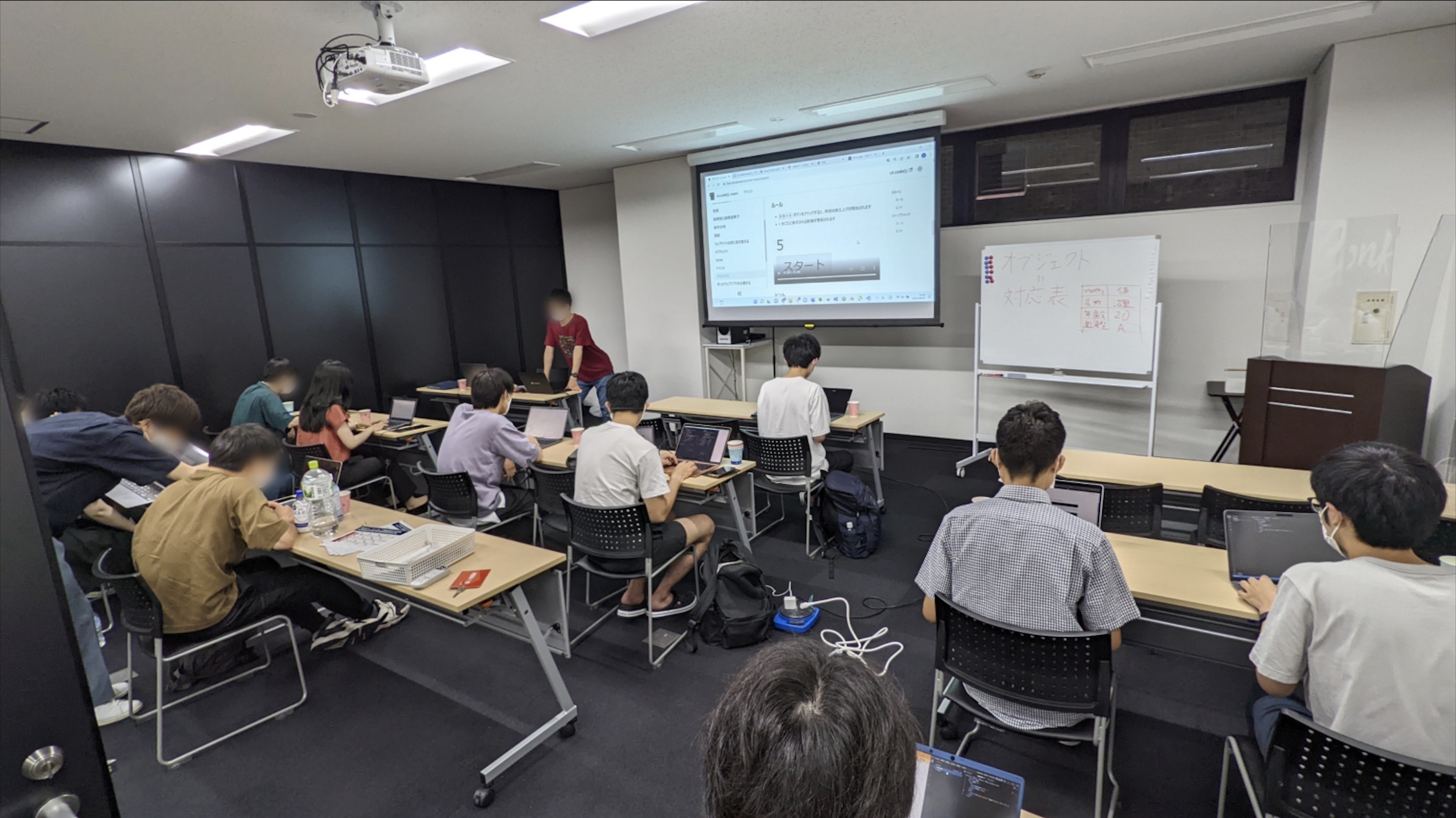
ut.code(); is a development programming circle established in 2019. It deals extensively with software and has ‘learning, exchange and development’ as the three pillars of its activities.
1) Learning.
The most difficult part of programming is the beginning of the learning process, and newcomer activities are conducted to provide strong support for the 0 → 1 part.
The software development technology continues to evolve on a daily basis, making it difficult for first-time learners to learn without wasting time. Create and publish highly reliable learning paths that are always maintained up-to-date.
(2) Exchange
Software development makes use of a variety of knowledge and experience that has not been systematised. The project regularly organises events to gain such knowledge through exchanges with other people.
▪ Gaining experience in the real world provides opportunities for dramatic growth. Information on internships and off-campus events is accumulated to support the career development of constituents.
3) Development
The development of products for the betterment of students and society, providing opportunities to acquire practical skills.
The project provides opportunities for students to develop products to improve themselves and society, and to acquire practical skills.
Activities
Annual projects
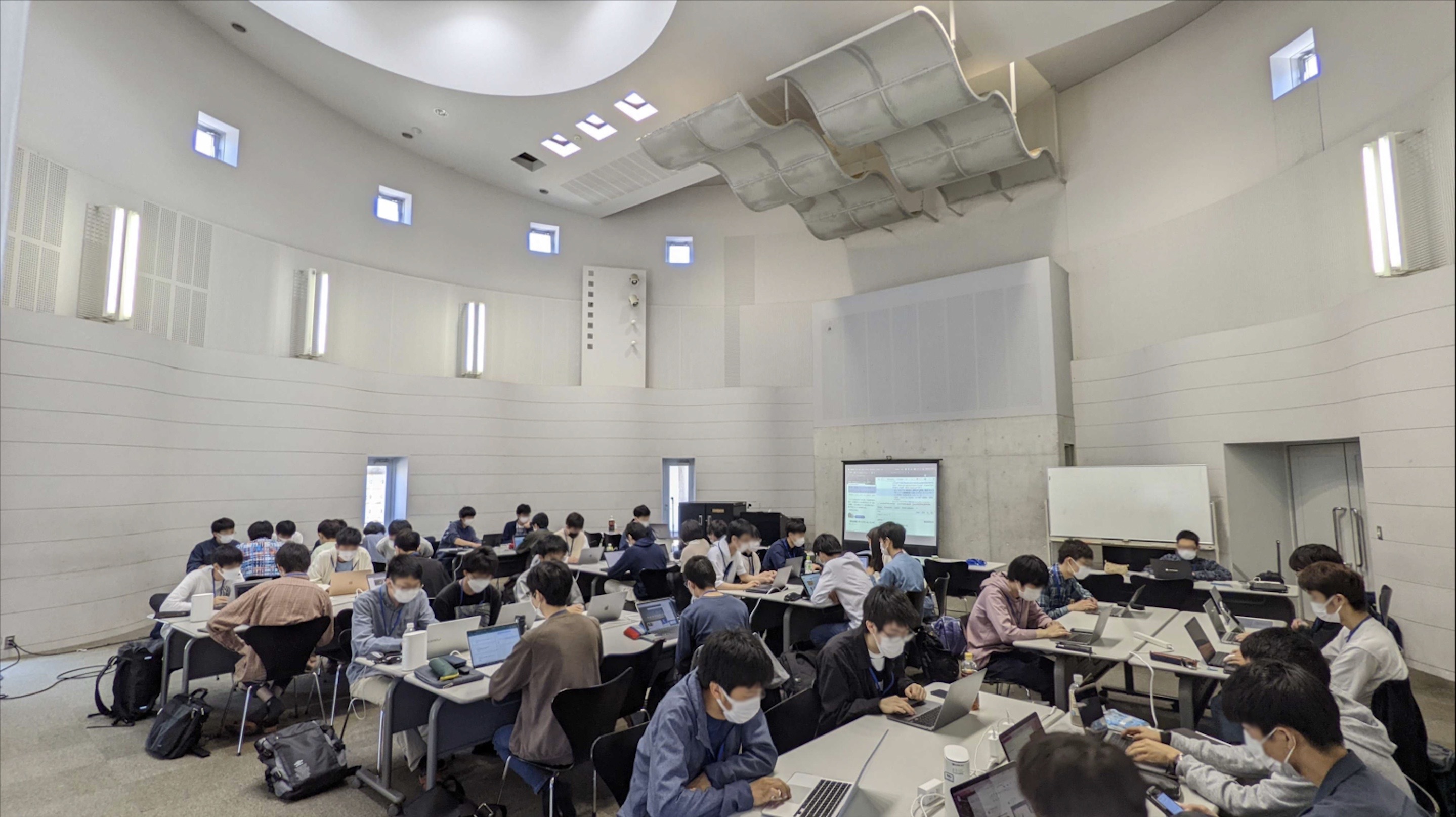
There are three main annual projects, including the running of all-campus seminars/independent seminars, the May Festival and Komaba Festival, and training camps.
At the May Festival and Komaba Festival, members who want to participate are invited, and after coming up with ideas, they are divided into teams to develop them. The project won the Grand Prix at the Komaba Festival in 2022.
Year-round projects.
In addition to the annual projects, year-round projects are also in operation regardless of the season.
Examples of current projects are
Sirakubus: a tool to help students register for courses.
Darumeshi: an application that suggests menus by simply answering questions.
CreateCPU: A platform for learning logic circuits in a web browser.
Dot Tutor Learn: A hands-on Braille learning site.
Dot Tutor Translate: a braille translation site.
Dot Tutor Translate: a braille translation site. In addition to these, new projects will start in earnest from spring break.
Composition of Membership
Headcount.
Currently around 600 people in the Slack workspace.Academic year.
1st year undergraduate to PhD.Executive years.
Mainly from November of 2nd year to October of 3rd year.Structure.
Recognised as an official member of the Alumni Association and currently working on the ongoing structure of the Circle.Gender balance.
Approximately 10-20% women.Time of joining
Mainly first- and second-year students join during the new year, but there are also a number of mid-career members.Attributes.
Many come with a desire to learn programming.Attrition rate
As the community aspect is important and members who only participate in Slack are allowed, there is not much of a concept of leaving the group.
Structure of Organization
How many members leave the activity in a year?
Around 0% (we don't have much of a concept of leaving, as we allow members who only participate in Slack to focus on the community aspect of the project).
What is the difference in the amount of commitments between members?
Intense.
Are there members who only come for fun or for launches?
Not at all.
Frequency of Activities
Circle as a whole.
Management meetings are held fortnightly (online).
Before the May Festival and Komaba Festival, members are recruited to participate in the planning and production of the project.
Before the start of each semester, members are recruited to participate in the running of all-campus seminars and voluntary seminars, and the seminars are run.
In addition to holding training camps during the spring and summer holidays, hackathons and brainstorming competitions are held on an irregular basis.Per project.
Each project has an online meeting basically once a week.
Face-to-face work meetings are held every other week or once a month in student halls and other venues.
The project members consult with each other to decide on scheduling and pacing, so there is a great deal of flexibility.
Annual Schedule
- April: New students welcome and S-semester seminars begin.
- May: May Festival
- August: Start of summer seminars, summer camps and preparation for Komaba Festival.
- September: Summer Seminars.
- October: Start of A-semester seminars.
- November: Komaba Festival
- December: Project brainstorming
- January: May Festival preparations begin.
- March: Spring training camp
- Other year-round projects are also run on an individual basis.
- Other hackathons and brainstorming sessions are held on an irregular basis.
Recruitment Information
With/without selection
No selection
Eligible for recruitment:
Basically University of Tokyo students only. There are no grade restrictions (graduate students can also join).
Actual members:
80% of the members are 1st-3rd year students, but there are also a certain number of 4th year students and postgraduate students.
Membership procedure details:
ut.code(); join the Slack workspace from the link on the ‘Join’ page of the website (https://utcode.net/join/)
Insiders' thoughts
○Pros
△Cons
Recruitment Schedule
Thank you for reading this article!
We have two things to tell you.
1. We share information about events, programs, and campus life through our official LINE account (in Japanese). Please consider registering.
LINE for students enrolling in 2023
LINE for students enrolling in 2024
LINE for students enrolling in 2025
2. We accept questions here. Please feel free to ask us anything!
Related Categories

For International Students
Circles that actively accept intl. students.

ACADEMIC
academic clubs/circles for international students
Related Clubs

UTokyo Bon Dance Ci(東京大学盆踊りサークル)
Mikan Fan Club (東大みかん愛好会)
UTokyo Quadball Circle
Welcome to the sport which has got an idea from Harry Potter.
東京大学ISK
UTokyo ISK( Independent Sound of Komaba)